
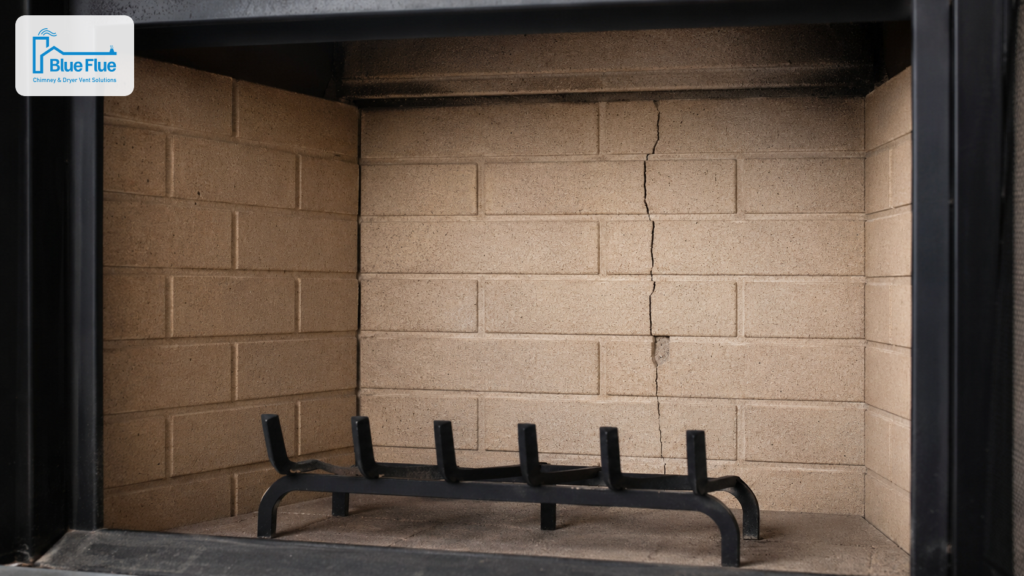
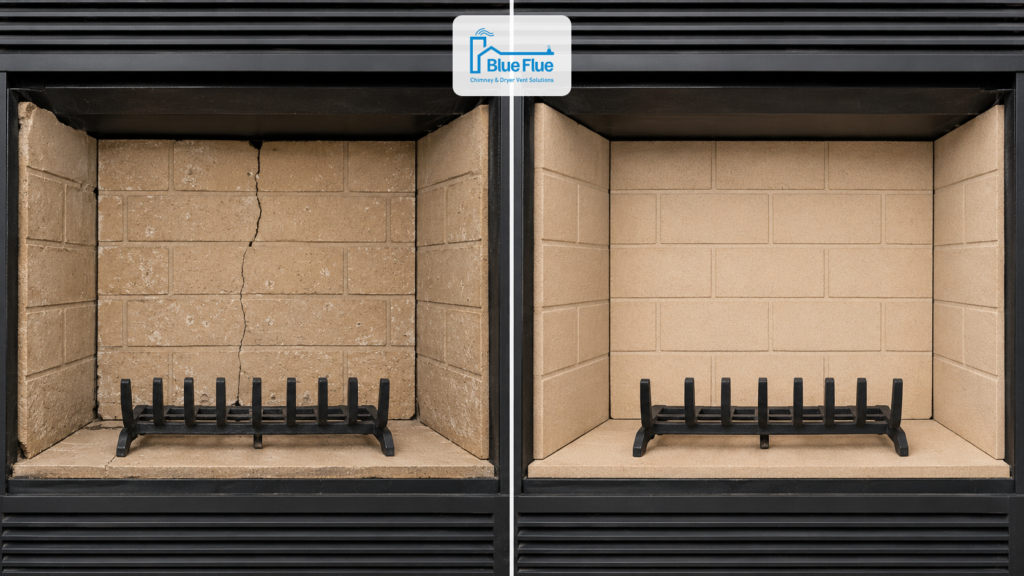
If you’ve ever peeked inside your fireplace and noticed the back or side walls are cracked, crumbling, or pitted, those are your refractory panels, and their condition matters far more than most homeowners realize. Cracked or broken panels aren’t just cosmetic wear. They’re one of the most common fire-safety issues we find during an inspection.
Here’s what refractory panels do, why cracks are a problem, and when they need to be replaced.
What Are Refractory Panels?
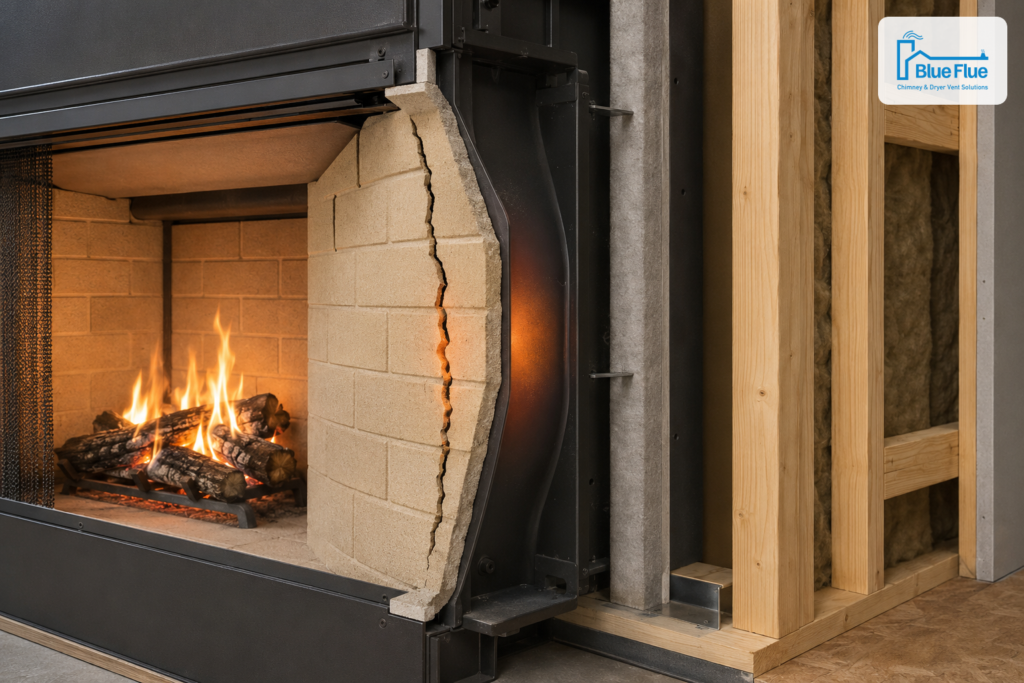
Refractory panels are the heat-resistant panels that line the inside of your firebox, the area where the fire actually burns. They’re typically made of a dense, fire-rated material designed to withstand extreme, repeated heat.
Their job is simple but critical: they contain the heat of the fire and protect the combustible materials, wood framing, drywall, and other structure, that sit behind and around your firebox. In other words, the panels are what stand between your fire and the rest of your house.
Why Cracked or Broken Panels Are a Serious Problem
When panels crack, chip, or crumble, they stop doing their one job.
- Heat reaches combustible materials. Cracks and gaps let intense heat pass through to the framing and structure behind the firebox. Over time, that heat exposure can ignite surrounding materials, one of the ways house fires start behind a fireplace that “looked fine.”
- Damage accelerates. A small crack rarely stays small. Each fire expands and stresses it further, and pieces can break loose, exposing more of what’s behind the panel.
- It signals other issues. Cracking can be caused by normal wear, but it can also point to moisture, movement, or overheating problems worth investigating.
A crack you can slip a coin’s edge into, gaps at the seams, spalling (the surface flaking or pitting), or missing chunks are all signs the panels are no longer providing the protection they’re supposed to.
How to Tell If Your Panels Need Attention
Take a look inside your firebox (when it’s cold and clean) and watch for:
- Visible cracks, especially ones wide enough to fit a coin edge into
- Surface flaking, pitting, or crumbling material
- Chips or missing pieces
- Gaps opening up at the seams between panels
- Any spot where you can see the material behind the panel
If you spot any of these, it’s worth having them evaluated before your next fire. Hairline surface cracks may be monitored, but deeper cracks and missing material generally mean replacement.
When Should Refractory Panels Be Replaced?
There’s no fixed lifespan, it depends on how often you burn and how the fireplace is used, but industry guidance is straightforward: refractory panels should be replaced once cracks are deep enough to compromise their protective function, or when material is missing.
This is exactly the kind of thing we check during a routine chimney inspection. We assess the firebox condition, tell you whether the panels are still safe, and if they’re not, we handle refractory panel replacement with panels rated for your fireplace.
Don’t Burn on Damaged Panels
It’s tempting to keep using a fireplace that still “works,” but damaged refractory panels are one of those problems that stay invisible until they’re serious. The fix is straightforward and far cheaper than the alternative.
If your firebox panels are cracked, crumbling, or you’re just not sure, let us take a look. Review our appointment tips to prepare, then call or text Blue Flue at 469-207-1203 or contact us to schedule your inspection today.
Homeowner Guide
Appointment Preparation & Jobsite Requirements
Scheduling service? Learn what to do before we arrive, service-specific prep steps & weather policies.