
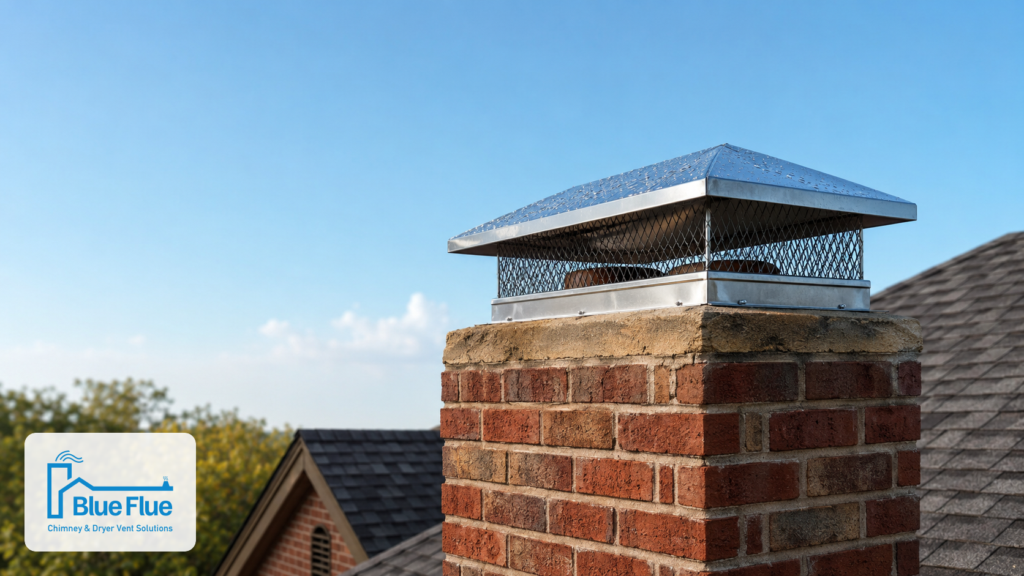
If you’ve ever looked up at a chimney and noticed a small metal cover on top, that’s a chimney cap, and it’s one of the least expensive, most valuable pieces of protection your chimney can have. Yet plenty of homes either never had one installed or lost theirs to weather and never replaced it.
Here’s what a chimney cap actually does, why your chimney shouldn’t be without one, and how the Blue Flue team can help.
What Is a Chimney Cap?
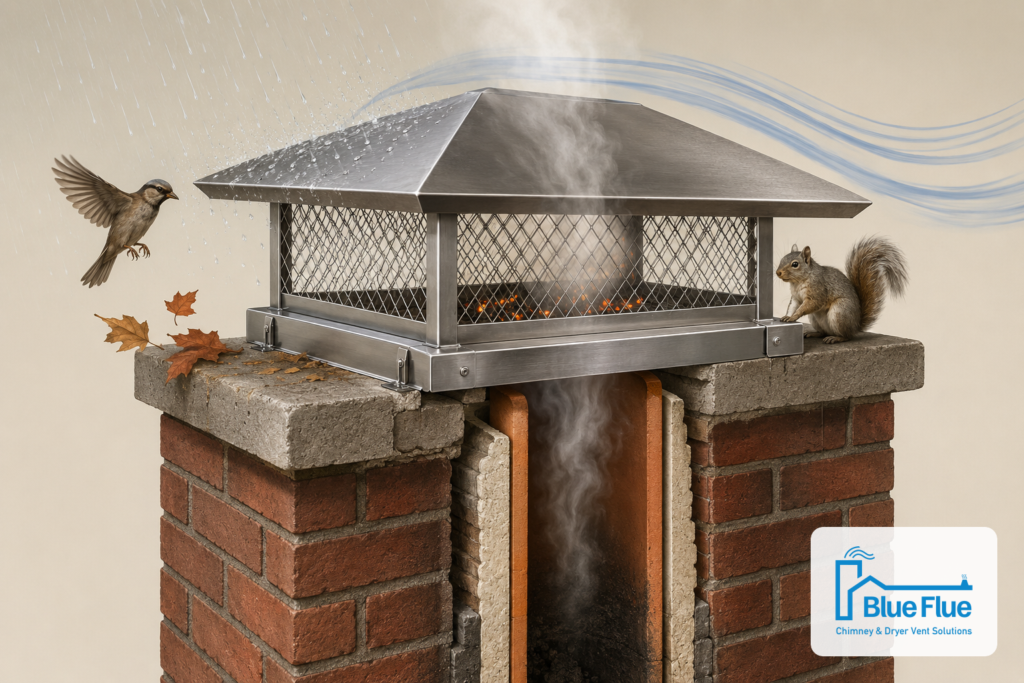
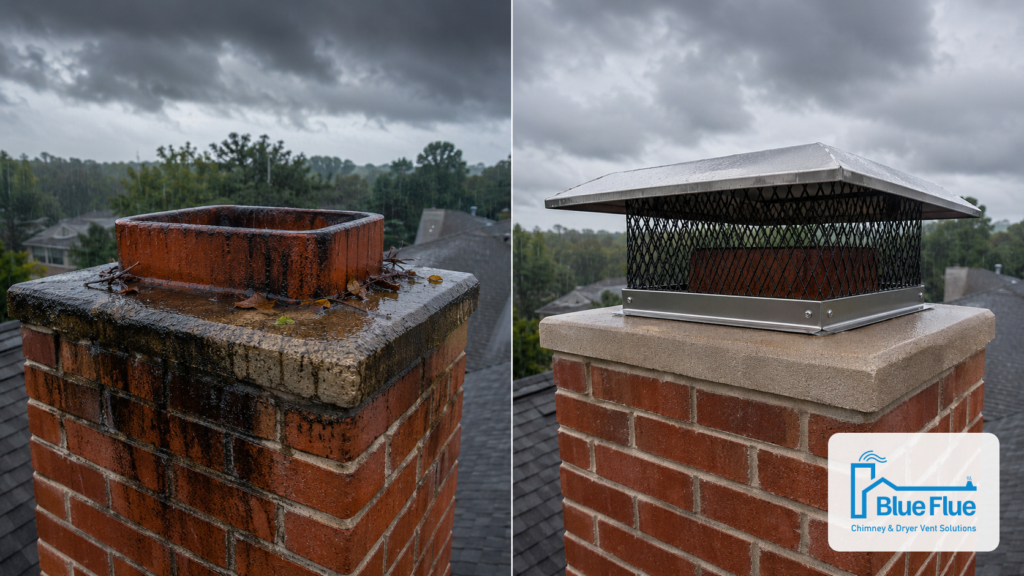
A chimney cap is a protective cover that sits on top of your chimney flue. It’s usually made of stainless steel or copper for durability, and it includes a mesh screen around the sides. The cap covers the opening while the mesh lets smoke and gases escape, so your fireplace still vents properly.
Simple as it looks, that little cover blocks a surprising amount of trouble from ever reaching your flue.
Why Do I Need a Chimney Cap?
1. It Keeps Rain and Moisture Out
An open flue is essentially a pipe pointed straight up at the sky. Every rainstorm sends water directly into your chimney, where it mixes with soot and creosote, damages the flue liner, rusts metal components, and speeds up masonry deterioration. Water is one of the most destructive forces a chimney faces, and a cap is your first line of defense against it. At Blue Flue, water intrusion is one of the most common problems we’re called out to fix, and a properly fitted cap prevents most of it.
2. It Keeps Animals Out
Birds, squirrels, raccoons, and bats love an uncapped chimney, it’s a warm, sheltered spot to nest. That leads to blockages, foul odors, droppings, and sometimes an animal that gets stuck and can’t get out. A cap with mesh sides seals the opening while still letting your chimney breathe.
3. It Blocks Debris
Leaves, twigs, and other debris collect easily in an open flue. Over time that builds into a blockage that traps dangerous gases like carbon monoxide inside your home. A cap keeps the flue clear, and if debris has already collected in yours, Blue Flue can clear it and cap it in a single visit.
4. It Stops Downdrafts
Wind blowing across an open flue can force air, smoke, and odors back down into your living space. Many chimney caps are designed to reduce these downdrafts, keeping your home more comfortable and your fireplace drawing correctly.
5. It Prevents Rooftop Fires
Burning wood sends sparks and embers up the flue. Without a cap, those embers can land on your roof or nearby brush. The mesh on a chimney cap acts as a spark arrestor, catching embers before they escape, an important safety feature, especially in dry regions.
How Long Does a Chimney Cap Last?
A quality stainless steel or copper cap can last for many years, but it isn’t maintenance-free. Weather, animals, and rust can damage caps over time, which is why Blue Flue checks your cap’s condition during every annual chimney inspection. If yours is missing, damaged, or corroded, it’s worth replacing promptly, the cost of a cap is small compared to the water and animal damage it prevents. (On larger prefab chimneys, this same protection often comes from a chase cover rather than a standard cap.)
Do I Have a Chimney Cap? Should I Replace Mine?
If you’re not sure whether your chimney has a cap, or whether the one you have is still doing its job, we can take a look. Blue Flue installs and replaces chimney caps sized correctly for your flue, and we’ll check its condition as part of any inspection.
Protect your chimney before the next storm or nesting season. Review our appointment tips to prepare, then call or text Blue Flue at 469-207-1203 or contact us to schedule your chimney cap installation or inspection today.
Homeowner Guide
Appointment Preparation & Jobsite Requirements
Scheduling service? Learn what to do before we arrive, service-specific prep steps & weather policies.