

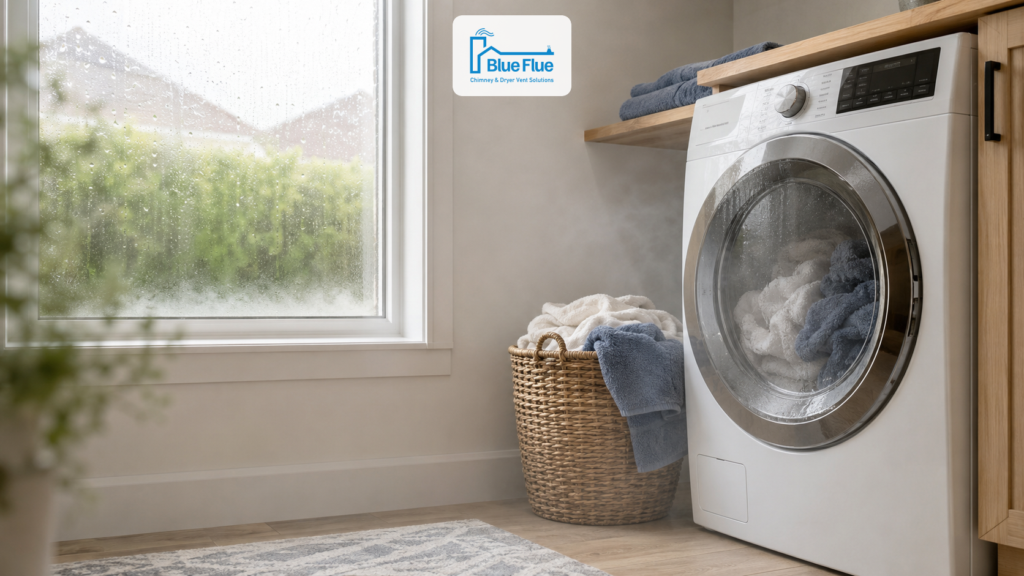
Every load of laundry produces a surprising amount of water. A single dryer cycle pulls gallons of moisture out of your clothes, and all of that humid air is supposed to travel through the vent and straight outside. When it doesn’t, that moisture ends up somewhere it shouldn’t: inside your home.
If your laundry room feels muggy, your windows fog up, or you’re noticing a musty smell or damp spots, your dryer vent may be the reason. Here’s what’s happening and why it matters.
How a Dryer Vent Is Supposed to Handle Moisture
Your dryer works by heating your clothes and evaporating the water in them. That water doesn’t disappear, it becomes hot, humid air that the dryer pushes out through the vent. A properly installed, clear vent carries all of it outside, where it belongs.
The system only works if that air has a clear, complete path to the exterior. Break that path anywhere, and the moisture has to go somewhere else.
Signs Your Dryer Vent Is Adding Humidity to Your Home
- A hot, muggy, or humid laundry room while the dryer runs
- Condensation on nearby windows, walls, or the ceiling
- A persistent musty or mildew smell around the laundry area
- Damp or discolored drywall near the dryer or along the vent run
- Peeling paint, warped trim, or bubbling wallpaper nearby
- Visible mold or mildew growth
- Water dripping from the vent connection or pooling behind the dryer
Any of these means moisture is escaping into your home instead of venting outside.
What Causes It
A clogged vent. When lint builds up and restricts airflow, humid air can’t escape efficiently. It backs up and leaks out at connections, or simply stays trapped in the room. (This is also why a clogged vent makes clothes take two cycles to dry.)
A disconnected or damaged duct. If the duct has come loose or been punctured, often inside a wall, attic, or crawlspace, all that warm, wet air dumps directly into the structure instead of going outside.
A vent that terminates in the wrong place. We regularly find dryers venting into an attic, crawlspace, or garage instead of outdoors. This is a code violation and a fast track to mold, wood rot, and moisture damage. Every load is essentially steaming the inside of your home.
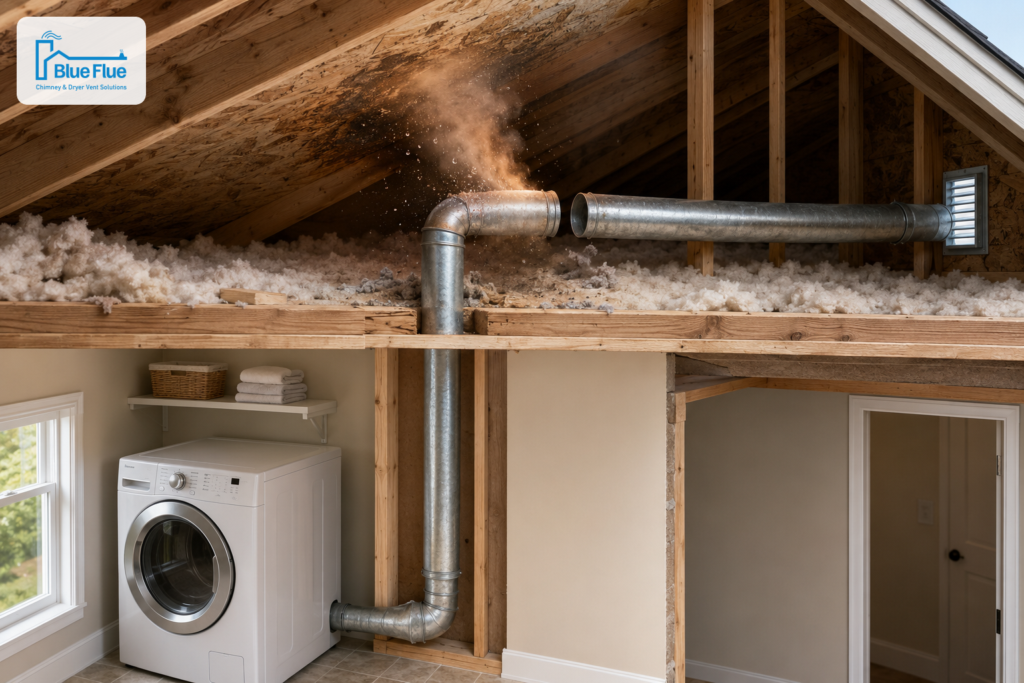
Condensation in long or cold runs. A vent that runs a long distance, or travels through an unconditioned attic or crawlspace, can let the warm, moist air cool and condense inside the duct. That water then drips back toward the dryer or soaks into surrounding materials.

A missing or stuck exterior flap. The termination cap should let air out and keep outside air (and humidity, and pests) from coming back in. A broken flapper undermines the whole system.
Why This Is More Than a Comfort Problem
Excess humidity from a dryer vent isn’t just uncomfortable, it does real damage:
- Mold and mildew thrive in the warm, damp conditions and can spread through walls and framing.
- Wood rot and structural damage develop where moisture soaks into framing, sheathing, or subfloor.
- Poor indoor air quality results from persistent dampness and mold spores.
- A dryer that won’t dry is almost always part of the same problem, since the trapped moisture means the vent isn’t moving air the way it should.
And as always with dryer venting, restricted airflow and trapped lint raise the risk of a dryer fire.
What We Do About It
Because a moisture problem can come from several different points in the system, we start with a full dryer vent airflow inspection to find where the air, and the water, is actually going. As CSIA Certified Dryer Exhaust Technicians (C-DET), we know a humidity complaint is rarely just a dirty vent.
From there, the fix depends on what we find:
- A clogged run gets a full cleaning.
- A torn or disconnected duct gets repaired.
- A vent dumping into an attic or crawlspace gets a proper exterior termination and, if the routing is the problem, rerouting or code correction to get it venting safely outdoors.
Don’t Let the Moisture Sit
Humidity damage is cumulative, the longer a dryer vents into your home, the more mold and rot it can cause. Catching it early is far cheaper than repairing water-damaged framing later.
If your laundry area feels damp or you’ve spotted any of the warning signs above, let us find the source. Review our appointment tips to prepare, then call or text Blue Flue at 469-207-1203 or book online to schedule your dryer vent inspection today.
Homeowner Guide
Appointment Preparation & Jobsite Requirements
Scheduling service? Learn what to do before we arrive, service-specific prep steps & weather policies.