
If you hear scratching, chirping, chattering, or, yes, quacking coming from your chimney, you are not imagining things. Animals love chimneys. They’re warm, sheltered, dark, and elevated, basically a five-star hotel for wildlife. And here in the Dallas-Fort Worth area, we see it all.
This guide covers what animal you’re likely dealing with, what you should absolutely not do, and how chimney animal removal actually works.
Real Stories from the Field
The Duck That Moved In
One of the most memorable calls we ever got was from a homeowner in Dallas who said they heard “splashing sounds” coming from their fireplace. When we arrived and looked up the flue with a camera, we found a duck, a full-sized duck, that had somehow made its way down the chimney and was sitting on the smoke shelf above the damper.
The duck was alive, healthy, and clearly confused about its life choices. We carefully opened the damper, guided it down into the firebox with a towel, and released it outside. The homeowner’s kids named it “Chimney” before it waddled off toward a nearby pond. We installed a proper chimney cap that afternoon, no more unexpected guests.
The Raccoon Family Standoff
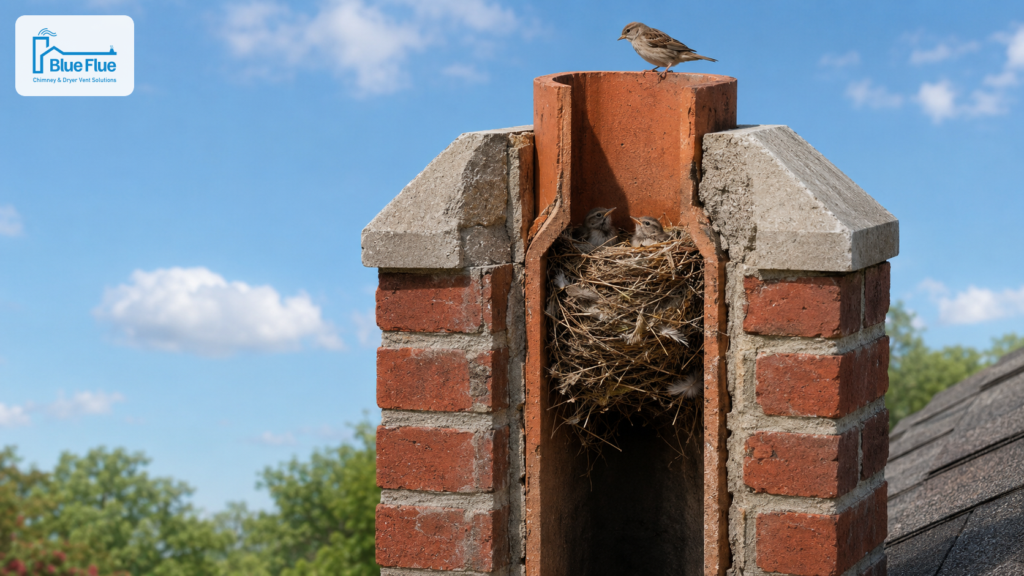
Another call came from a family in the suburbs who had been hearing heavy scratching and chattering sounds for several days. When we inspected the chimney, we found a mother raccoon had made a nest on the smoke shelf, and she had babies with her.
Raccoons are smart, strong, and protective of their young. This is not a DIY situation. We used humane exclusion techniques to encourage the family to relocate on their own over 48 hours, then cleaned and sanitized the flue and installed a heavy-duty stainless steel chimney cap with a proper spark arrestor screen. Those raccoons were not getting back in.
Common Animals Found in DFW Chimneys
Birds
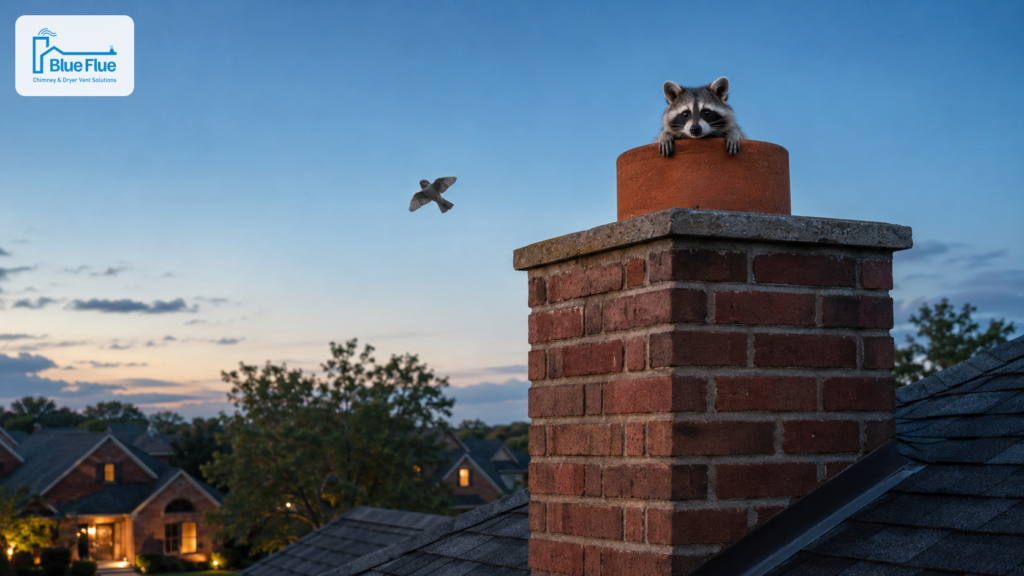
The most common chimney invaders in North Texas. Chimney swifts are actually a protected species under the Migratory Bird Treaty Act, if they’re nesting, you legally cannot remove them until the babies fledge (typically 2-3 weeks). Other common species include starlings, sparrows, and the occasional owl.
Signs: Chirping sounds, especially in spring and early summer. Droppings or feathers in the firebox.
Raccoons
Raccoons are excellent climbers and are drawn to chimneys as den sites, especially mothers looking for a safe place to raise their young. They can cause significant damage to the flue liner, damper, and smoke shelf.
Signs: Heavy scratching, chattering sounds (especially at night), strong musky odor from the fireplace.
Squirrels
Squirrels frequently fall into chimneys and cannot climb back out on smooth flue tile. A trapped squirrel will make frantic scratching sounds.
Signs: Rapid, panicky scratching sounds, usually during daylight hours.

Bats
Bats sometimes roost in chimneys, particularly in older homes with larger flues. Like chimney swifts, many bat species are protected.
Signs: High-pitched squeaking at dusk, small droppings (guano) in the firebox.
Opossums and Snakes
Less common but not unheard of in DFW. Opossums can climb into uncapped chimneys, and snakes may follow prey (mice, birds) into the flue.
What to Do If You Hear an Animal in Your Chimney
Do NOT open the damper. If the animal is sitting above the closed damper, opening it will release the animal into your home. A panicked raccoon or bird loose in your living room is a much bigger problem.
Do NOT light a fire. This is cruel and dangerous. Smoke and heat will not “encourage” the animal to leave, it will likely kill the animal, and a panicked burning animal can cause a chimney fire or escape into your home.
Do NOT try to smoke them out. Same reasoning as above. Plus, a dead animal in your chimney creates a terrible odor that can last for weeks.
DO close the fireplace doors or screen. If the damper is already open, close the glass doors or place a screen to prevent the animal from entering your home.
DO call a professional. Animal removal from chimneys requires the right tools, training, and sometimes permits (for protected species). Blue Flue Solutions handles chimney animal removal humanely and safely.
The Professional Removal Process
- Assessment. We determine what type of animal is present, where it’s located, and whether young are involved, often with a camera inspection of the flue.
- Humane removal. Using species-appropriate techniques to safely remove or exclude the animal.
- Cleaning and sanitization. Animal nests, droppings, and debris are removed and the flue is professionally cleaned.
- Damage inspection. We check for damage to the flue liner, damper, and chimney structure.
- Prevention. A proper chimney cap with a spark arrestor screen is installed to prevent future animal entry.
Prevention: The Cost Effective Solution
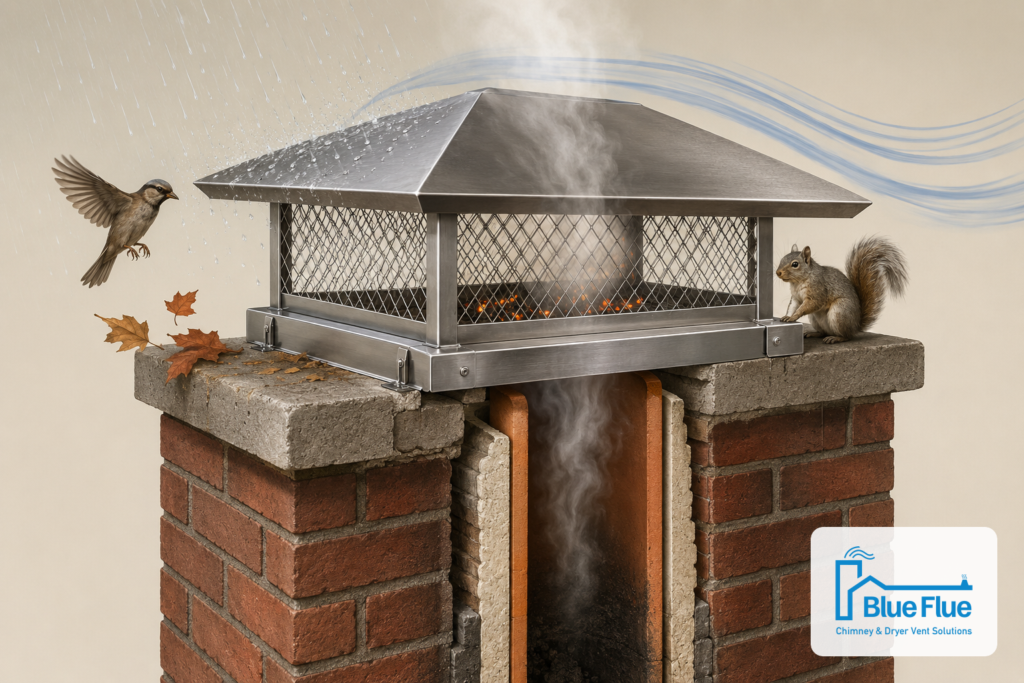
A quality stainless steel chimney cap with a mesh spark arrestor screen is the single best investment to prevent animal entry. It also keeps out rain, debris, and downdrafts. For DFW homeowners, we recommend:
- Stainless steel cap that won’t rust in Texas weather, with a lifetime warranty
- Proper mesh size, large enough to pass smoke and heat, small enough to block birds and animals
- Professional installation that ensures a proper fit and seal
Protected Species in Texas
Be aware that some chimney visitors are legally protected:
- Chimney swifts are protected under the Migratory Bird Treaty Act. If nesting, they cannot be disturbed until the young have left (usually by mid-October).
- Most bat species in Texas are protected. Exclusion must be done outside of maternity season.
- Migratory birds with active nests, eggs, or young are generally protected.
A professional chimney service like Blue Flue Solutions knows these regulations and will advise you on the legal and humane course of action.
Frequently Asked Questions
What animal is in my chimney?
Chirping in spring usually means birds; frantic daytime scratching often means a trapped squirrel; heavy nighttime scratching with a musky smell points to raccoons; high-pitched squeaking at dusk suggests bats. A camera inspection confirms it for certain.
Will the animal get out on its own?
Sometimes birds and bats can, but squirrels and animals that have fallen onto the smoke shelf usually can’t climb back up smooth flue tile, and mothers with young won’t leave until the babies can travel. Waiting often ends with a dead animal and a lasting odor.
How do I keep animals out of my chimney for good?
A properly installed stainless steel chimney cap with a spark arrestor screen. It’s the single most effective and affordable prevention.
Hear Something Up There? Don’t Panic, Just Call.
Blue Flue Solutions provides humane chimney animal removal and nest cleaning throughout Dallas-Fort Worth. If you hear something in your chimney, don’t panic, and don’t light a fire, just call or text 469-207-1203 or book online and we’ll take care of it. (New to us? See our appointment tips first.)
Homeowner Guide
Appointment Preparation & Jobsite Requirements
Scheduling service? Learn what to do before we arrive, service-specific prep steps & weather policies.