

If you’re running your dryer twice just to get a load dry, your appliance probably isn’t failing, your dryer vent is likely clogged. It’s one of the most common problems homeowners overlook, and it’s more than an inconvenience. A blocked dryer vent is a documented fire hazard.
Here’s what’s happening, why it matters, and what to do about it.

The Most Likely Cause: A Clogged Dryer Vent
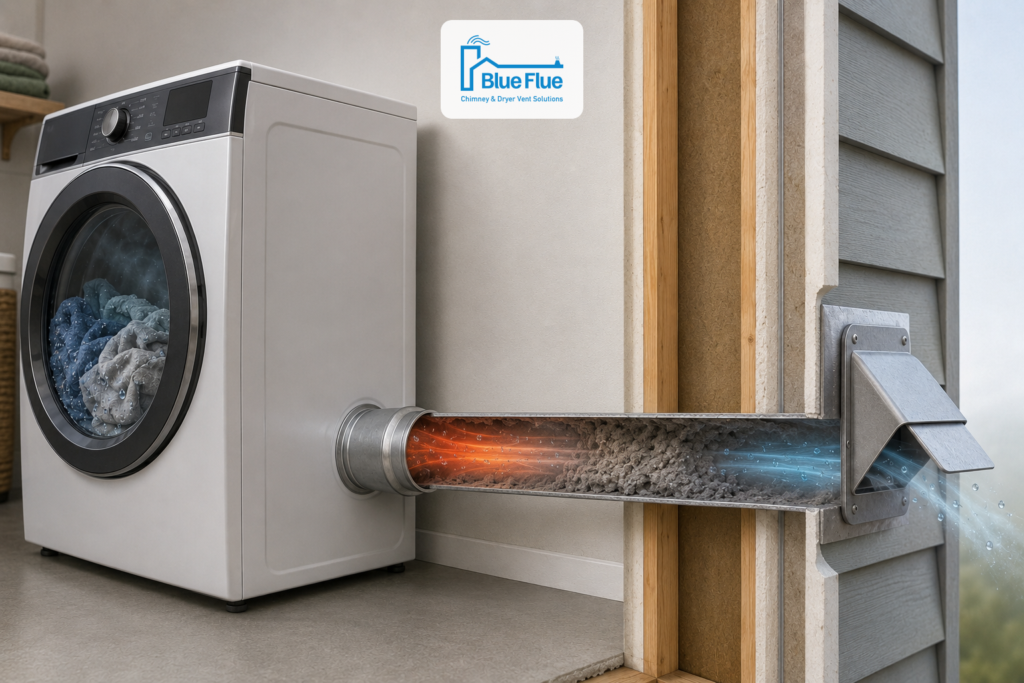
Every time you dry a load, your dryer pushes hot, moist air, and a surprising amount of lint, out through the vent. Over time, lint builds up inside the vent and the exhaust duct. As that passage narrows, moist air can’t escape efficiently, so your clothes stay damp and you’re forced to run a second cycle.
In other words, the extra cycle isn’t drying your clothes better. It’s compensating for airflow that’s being choked off by lint.
Why This Is a Safety Issue, Not Just an Annoyance
Lint is highly combustible, and a clogged vent creates the exact conditions for a fire: trapped heat, restricted airflow, and a buildup of flammable material.
The Chimney Safety Institute of America (CSIA), the non-profit educational organization best known for certifying chimney and venting professionals, also trains and certifies dryer exhaust technicians through its Certified Dryer Exhaust Technician (C-DET) credential. The reason is simple: dryer venting is a fire-safety system, and it deserves the same professional attention as any other exhaust in your home.
Fire-safety authorities, including the U.S. Fire Administration, consistently report that failure to clean is the leading cause of home clothes dryer fires. Regular cleaning is the single most effective way to prevent them.
Warning Signs Your Dryer Vent Is Clogged
Watch for these red flags:
- Clothes are still damp after a full cycle, or take two cycles to dry
- The dryer or your clothes feel unusually hot to the touch
- The laundry room becomes hot and humid while the dryer runs
- You notice a burning or musty smell during operation
- Little or no air comes out of the exterior vent hood when the dryer is running
- Lint is visible around the outside vent opening
- Drying times have gradually gotten longer over the past several months
Any one of these is worth investigating. Several together mean it’s time to act, and the quickest way to know for sure is a dryer vent airflow inspection.
What You Can Do
Clean the lint trap every load. This is basic maintenance, but it only handles a fraction of the lint your dryer produces. The rest collects deep in the vent where you can’t reach it.
Check the exterior vent. With the dryer running, confirm that warm air is flowing freely out of the vent hood on the outside of your home. Weak airflow points to a blockage.
Have the full vent professionally cleaned. A proper dryer vent cleaning clears the entire duct run, from the dryer to the exterior termination, restoring airflow and removing the fire risk. This is work best left to a trained technician, especially on long or complex duct runs, or vents that exit through the roof.
How Often Should a Dryer Vent Be Cleaned?
In line with CSIA guidance and general fire-safety recommendations, most homes should have their dryer vent inspected and cleaned at least once a year. Households that do a lot of laundry, have long duct runs, or share a laundry setup may need it more often.
When the Problem Is the Vent Design Itself
Sometimes clothes take two cycles to dry even after a cleaning, and that usually points to the way the vent is routed rather than lint alone.
Every bend, elbow, and turn in a dryer duct slows airflow and gives lint a place to catch and pile up. A vent that snakes through several 90-degree angles, runs a long distance to reach an exterior wall, or takes a complicated path up to a roof termination is working against itself. Even when it’s clean, air struggles to move through it, so moisture lingers and drying takes longer. These runs also clog faster and need cleaning more often.

Modern code exists specifically to limit this: there are limits on total duct length, and each turn effectively shortens how far the rest of the run is allowed to go. Older homes, additions, and DIY installations frequently exceed those limits without anyone realizing it.
If your vent has too many angles or an overly long path, the real fix isn’t just another cleaning, it’s rerouting the vent to a shorter, straighter path or bringing it up to code. Blue Flue can evaluate the routing, tell you whether it’s the culprit, and correct it so your dryer actually dries in a single cycle.
Get It Checked Before It Gets Worse
If your dryer is taking two cycles to dry a load, don’t just keep running it, that’s added energy cost, wear on your appliance, and a growing fire risk. Blue Flue will inspect your dryer vent, clear it thoroughly, and confirm your system is venting safely. If we find a damaged duct, a poorly routed run, or a setup that isn’t up to code, we also handle dryer vent repair, installation and rerouting, and code correction.
Review our appointment tips to prepare, then call or text Blue Flue at 469-207-1203 or contact us to schedule your dryer vent inspection and cleaning today.
Homeowner Guide
Appointment Preparation & Jobsite Requirements
Scheduling service? Learn what to do before we arrive, service-specific prep steps & weather policies.